We've moved! Visit
The Keyword
for all the latest stories about
life at Google
and our
student programs
.
Student Blog
Brought to you from your @GoogleStudents friends. From pre-university to PhD (and beyond), we got you.
My Path to Google: Olumuyiwa Adenaike, Software Engineer
October 27, 2017
Welcome to the eleventh installment of our blog series “My Path to Google.” These are real stories from Googlers, interns, and alumni highlighting how they got to Google, what their roles are like, and even some tips on how to prepare for interviews.
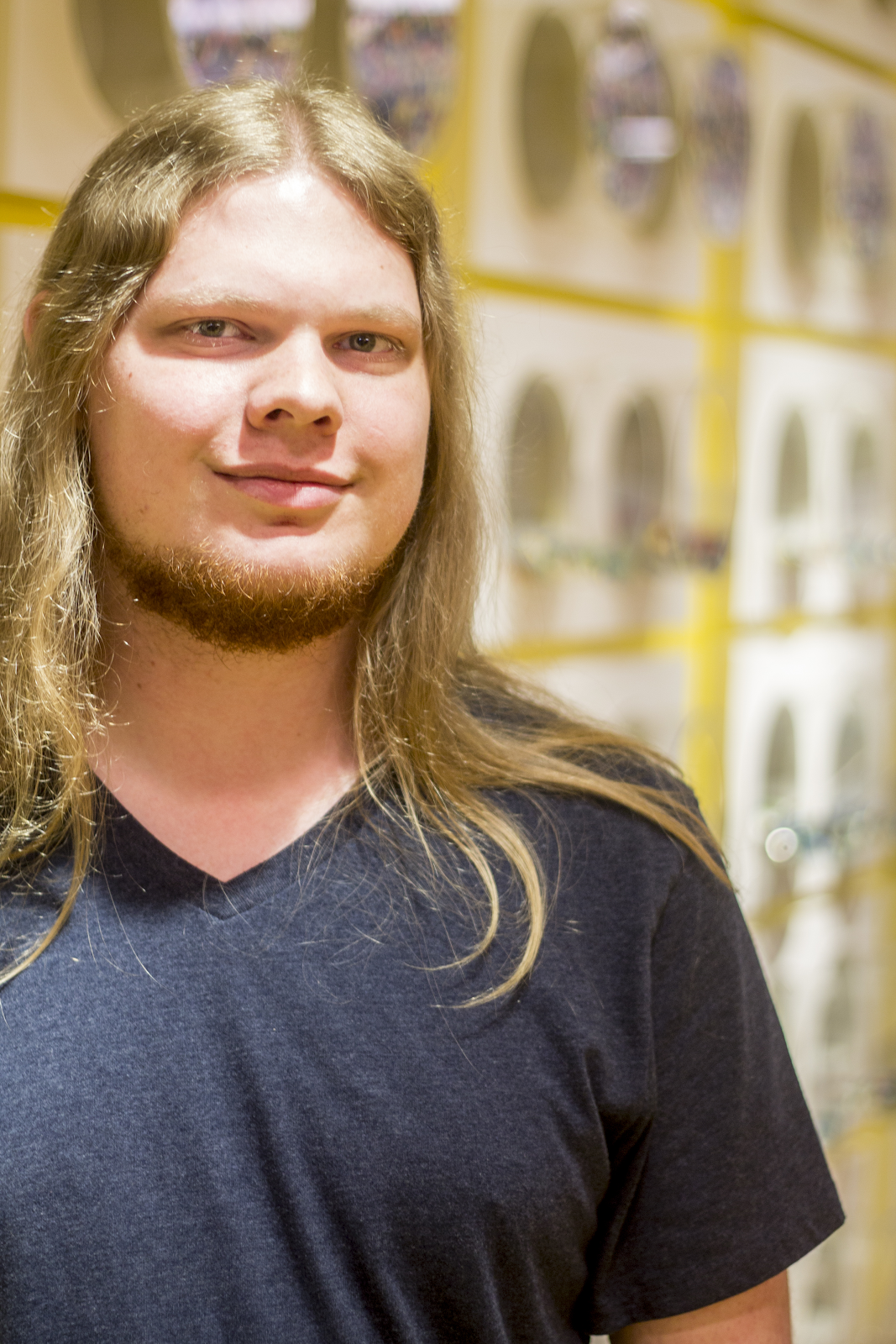
Today’s post is all about Olumuyiwa Adenaike. Read on!
Can you tell us a bit about yourself?
I was born and raised in Lagos, Nigeria, Africa's largest city. Growing up, I was always intrigued by science and math, and this inspired me to move to the US right after high school to major in computer science at DePaul University in Chicago. Outside of work, I like to stay active as much as I can by playing soccer, basketball, and lifting weights. I also enjoy cooking new dishes from time to time.
What’s your role at Google?
I am a Software Engineer (SWE) on the Google Now quality team, which ensures that we are serving users with content they are interested in. A cool project that I am currently working on uses Machine Learning to predict what content to show the user depending on their interaction with the app.
What inspires you to come in every day?
I am inspired every day by the product I work on. Knowing that millions of people all over the world use and depend on what I help build makes me always eager to work and learn new things. I am also inspired by my team members who share my eagerness, as well as their deep technical knowledge and expertise. I appreciate the opportunity to learn from them every day.
Can you tell us about your decision to enter the process?
I was interested in Google because of the principles the company stands for, such as fairness and equity, freedom of speech and information, and charity. Also, I knew the best minds were at Google, and in order for me to move forward in my career, joining Google was the best choice.
How did the recruitment process go for you?
I was contacted by a Google recruiter during my senior year in college. I went through the process while I was studying for finals, so I was anxious the entire time. The hiring process was smooth, and although I had a lot of interviews, I was happy with the outcome at the end.
What do you wish you’d known when you started the process?
I wish I had spent more time on personal projects and also on larger collaborative projects throughout my college years. I feel that would have helped me learn to get my points and ideas across better in the interviews.
Can you tell us more about the resources you used to prep?
I spent a lot of time practicing algorithm-based questions for the technical interviews. I also did research about the position and met with other software engineers at Google to get advice on navigating the process. In addition, I had a practice interview with a Google engineer, which really helped me have a better idea of what to expect.
To finish, do you have any tips you’d like to share with aspiring Googlers?
Spend a good amount of time honing your skills and refining your craft. It is important that you believe in yourself and your abilities, as they will speak for you during the interview process and in your day-to-day work. Also, don't be discouraged if you don't make it; there are many people at Google who got hired after several tries.
Want to learn more about the Engineering Residency? Watch
our video
, or head over to
g.co/EngResidency
. Ready to apply to the residency? We're currently accepting applications at
https://goo.gl/rhBmj1
.
Rajat Talesra brings Applied CS with Android to Dhirubhai Ambani Institute of Information and Communication Technology
October 25, 2017
Today we get the chance to hear from Rajat Talesra, an entrepreneur and outstanding Applied CS with Android facilitator who studied Information and Communication Technology at Dhirubhai Ambani Institute, Gandhinagar from 2012 to 2016. Through his work with
Applied CS
, he’s trained over 900 students across 13 universities to build simple Android games with important CS concepts.
Can you tell us a bit about yourself?
I’m an enthusiastic entrepreneur, Android application developer, and passionate teacher. In my first two years, I did volunteer work for various clubs and committees during college festivals and also organized and managed events in technical and annual festivals.
How did you get interested in Android/mobile development in the first place?
After completing two years of technical studies in college,
I started learning Android application development. I started with online video lectures, and after that, I tried to create one simple Aptitude-based Android application, which was finally uploaded to the Google Play Store. By the end of my third year, I had worked for two different startups as an Android developer. Through this experience, I was able to create some applications on the side, conducted events, and managed a technical festival for our college. I also participated in a good number of competitions and hackathons at my school, which was great exposure to Android technology.
How did you hear about Applied CS and why did you want to participate as a facilitator?
In my third year of university, with the help of the IEEE student branch, the local
Google Developer Groups
(GDGs), and my enrollment in Udacity Android courses, I was involved not just in learning how to build Android applications, but teaching and supporting other university students learning how to program for Android. Because of this Android and teaching experience, I was nominated to be a facilitator for the Applied CS program.
What are some of the things you learned as a facilitator?
First is that you’re inevitably going to make mistakes, and that’s OK! You don’t have to be an expert, and there are no illusions that you have all the answers. During the first workshop I facilitated, I misspoke a couple of times and had some errors in the code I was writing on the board to demonstrate the functions and app to the participants. Despite those errors at the beginning, the most important part was to be available to help address any and all doubts from every participant during the workshop, troubleshooting and working alongside them, and navigating through any errors or bugs together. This was most important to the participants— that I be flexible and available to help out.
Second, I learned to prepare! I’d also recommend to facilitators to take some additional time to prep—in the two weeks beforehand, I took a look over
the materials
and
the content
to strengthen my basic understanding.
Lastly, facilitating this program helped me realize that teaching technology was a passion, and I wanted to take on more of these initiatives on my own. I ended up not joining a company when I got selected for industry placement, but instead, I started teaching Android to various groups and also started working on my initial ideas for some products.
What was the most challenging part of being an Applied CS facilitator?
I quickly realized that reviewing all the required concepts for the program was helpful, but not the most important part of running successful workshops. Even after reviewing the technical concepts we’d be covering, I realized that figuring out the best way to explain them to other students was the more important piece. I started creating different kinds of materials— presentations, some pseudo code, sketches to visualize concepts on board. The most successful resource was comparing the visualizations with the code.
Now, the
Applied CS technical unit videos
help take off a large amount of the pressure to explain, but I’d still recommend knowing what you will demo or say to introduce the workshop.
What do you think was your greatest success as an Applied CS facilitator?
Since becoming a facilitator, I’ve brought the program to over five universities and hundreds of new students, and been offered opportunities to guest lecture about Android, which is all awesome. But in addition to that, it feels good to see others I’ve worked with benefit from the knowledge and pay it forward through teaching others themselves. Student volunteers who helped me run the workshops have now become facilitators, and it feels great to see them grow and teach others.
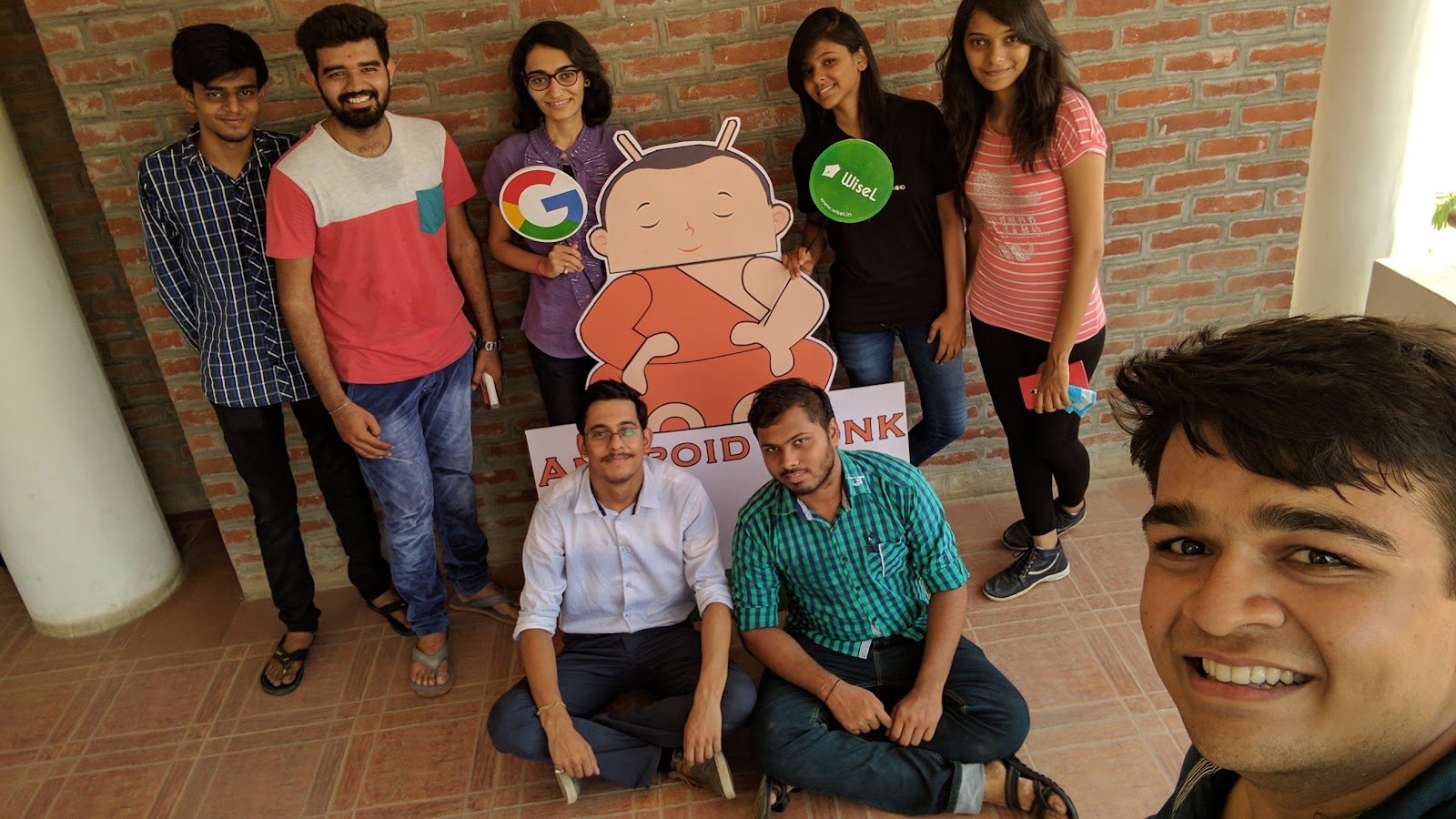
Lastly, my love for Android and teaching/facilitating helped inspire my career. I’ve started to create a mobile app that can help teachers mark student attendance in classrooms. And facilitating has opened doors for me to teach Android more formally. I started my own ‘AndroidMonk’ tutorial service, where I have trained even more students and even employees at companies!
What would be your biggest piece of advice to anyone who wants to bring the Applied CS program to their university?
Don’t try to take on the world by yourself. As a facilitator, reach out to friends and other students who are passionate and excited about Android and computer science education to help you out as volunteers or co-facilitators in the workshops. Create one small and strong team to conduct workshops, and then the results will be great. Also, always feel free to reach other facilitators to know what they are doing at their universities.
Applications are open for 2018 scholarship opportunities in the US, Canada, Europe, the Middle East, and Africa!
October 20, 2017
Google is proud to offer academic scholarships and development opportunities to students from historically underrepresented groups pursuing computer science degrees. We aim to help students from diverse backgrounds become future leaders and role models in computing and technology by breaking down the barriers that prevent them from entering these fields.
Selected students will receive a financial award for the 2018-19 academic year and be invited to the annual Google Scholars' Retreat in their region next summer. At the retreat, scholars will participate in networking and development sessions, including sessions on how to lead outreach in their communities. Scholars also join long term a community of former scholarship recipients for continued networking and development. Check out each program below:
Women Techmakers Scholars Program
(United States/Canada/EMEA -
Asia Pacific will open in early 2018
)
The Women Techmakers Scholars Program (formerly known as the Google Anita Borg Memorial Scholarship) continues to honor Dr. Anita Borg and her legacy of encouraging the presence of women in computing. The program is open to current undergraduate or graduate students who identify as female who will be studying at a university for the 2018-2019 academic year.
Generation Google Scholarship
(United States/Canada)
The Generation Google Scholarship was established to help aspiring computer scientists excel in technology and become leaders in the field. This program supports current university students from underrepresented groups including African American, Hispanic, American Indian or Filipino/Native Hawaiian/Pacific Islander who will be studying at a university for the 2018-2019 academic year.
The Generation Google Scholarship for current high school seniors in the United States/Canada will open in early 2018.
Google Lime Scholarship (United States/Canada)
and
The Google Europe Scholarship for Students with Disabilities
We’re continuing to partner with Lime Connect (United States/Canada) and EmployAbility (Europe) - nonprofit organizations that support students with disabilities while they pursue education and promising careers - to help university students with disabilities work toward their academic goals in the field of computer science. The scholarship is open to current undergraduate or graduate students with disabilities who will be studying at a university for the 2018-2019 academic year.
Google Student Veterans of America (SVA) Scholarship
(United States)
Google established the Google SVA Scholarship in partnership with
Student Veterans of America
in 2012 as part of our commitment to military veterans. The scholarship provides assistance to student veterans or students on Active Duty who are pursuing a degree in computer science at a university for the 2018-2019 academic year.
Please visit each program’s website for specific details, application information, and deadlines. We encourage all students who meet the eligibility criteria to apply!
My Path to Google: Aurelie Chazal, Support Specialist
October 17, 2017
Welcome to the tenth installment of our blog series “My Path to Google.” These are real stories from Googlers, interns, and alumni highlighting how they got to Google, what their roles are like, and even some tips on how to prepare for interviews.
Today’s post is all about Aurelie Chazal. Read on!
Can you tell us a bit about yourself?
I grew up in Clermont-Ferrand in France and had a bit of an unusual academic path. I first did a Bachelor’s in Applied Foreign Languages with English & Mandarin and then went on to do a Master’s in New Media Communication. I always joked I was a Googler before joining Google, because I was good at finding things online but I never actually had any contact with Google before I was hired two years ago.
What’s your role at Google?
I’m part of the
gTech organization
within Google, and I support our biggest app advertisers when they have technical issues or complex questions around
AdWords
. I had almost no experience with AdWords when I started, and I love the fact that I got the chance to become a real expert in my product area within two years on the team.
In addition to my day-to-day support role, I’m also very involved with diversity and inclusion, and I currently lead
a project meant to empower small, LGBT-owned businesses
by teaching them the basics of online marketing.
What inspires you to come in every day?
The people on my team are, without a doubt, my biggest source of inspiration and motivation. I had heard that working at Google meant being surrounded by smart, open-minded people, but I never actually thought it would play that big of a role in my wellbeing at work. This is the first job where I can fully be myself and have so much fun while doing my job!
Can you tell us about your decision to enter the process?
When I applied for a job at Google, I was working for a small Polish startup. I was the only non-Polish person and the only girl on a team of around 10 people. I had always been interested in joining Google, but what really pushed me to apply is that I knew I needed to move to a more diverse working environment if I wanted to be happier at work. I didn’t think I’d actually have a chance to be hired at Google, but I saw an opening and decided to go for it.
How did the recruitment process go for you?
I found out there was a job opening in the city I live in through an expat Facebook group. I wrote to the girl who posted about the opening with my CV, and she sent my CV to the Google recruiters. I got an email back a few days later, asking to set up an initial phone interview. The process was really smooth after that. I did one more phone interview and three on-site interviews at the end. While some questions were tough, I don’t remember receiving any “trick” questions. The entire process was really enjoyable, and the conversations I had during the interviews were an amazing sneak peek into what it’s like to work on the team.
What do you wish you’d known when you started the process?
I wish I had known a little more about what the day-to-day job looked like. My one recommendation to anyone who starts an interview process with Google would be to try and get in touch with Googlers working for the team you’re looking to join and ask them what a typical day looks like for them. It’s the best way to get the right expectations about the job and prepare for the interviews.
Can you tell us more about the resources you used to prep?
I went through recent articles from the
Inside AdWords
blog and tried to remember 2-3 upcoming changes that were announced, along with the potential challenges and opportunities that would come with them. This was specific to my experience, as my job was going to be with AdWords, but my goal was to find topics to discuss that would be relevant to me and the job I was applying for in case I got any questions about Google.
To finish, do you have any tips you’d like to share with aspiring Googlers?
Research the position you are applying for and prepare! Your academic background, your grades, your previous work experience, etc. won’t matter as much as you showing motivation and interest in the company and the position you are applying for.
Don’t be the one putting yourself down. You really have nothing to lose by trying, so apply, do your research, and don’t give up if you get one or two rejections. Sometimes, timing isn’t in your favor, or the team you applied for wasn’t the best fit for you. It doesn’t mean you are not a fit for Google as a whole!
My Path to Google: Jasmine Collins, Google Brain Residency Alumna
October 5, 2017
Welcome to the ninth installment of our blog series “My Path to Google.” These are real stories from Googlers, interns, and alumni highlighting how they got to Google, what their roles are like, and even some tips on how to prepare for interviews.
Today’s post is all about Jasmine Collins. Read on!
Can you tell us a bit about yourself?
I grew up in Pittsburgh, Pennsylvania. I stayed local for college, and went to the University of Pittsburgh, where I double majored in neuroscience and computer science, and minored in chemistry. My dream is to contribute to bridging the gap between computer intelligence and human intelligence. Outside of work, I really enjoy plants and gardening. Also, I love dogs!
What’s your role at Google?
I was on the Google Brain team as a part of the first iteration of the Google Brain Residency Program — a year long training program in deep learning research. For me, it was really excellent to have the opportunity to take a year off between undergraduate and grad school and get some real world work/research experience. Being a Google Brain resident definitely solidified my decision to go to grad school, and helped me bulk up my resume to get into one of the top universities for artificial intelligence/deep learning research — UC Berkeley!
During the residency, I was able to publish my first, first-author paper. In it, we experimentally investigated the tradeoffs across different recurrent neural network architectures in terms of capacity and trainability. The project involved running thousands of optimizations in parallel, over many, many weeks. I really enjoyed this project, as it was something that could only be done with Google-scale infrastructure, but it had findings that could be applicable to the rest of the research community.
What inspires you to come in every day?
My favorite part about coming in every day was the lunch conversations with my regular lunch group. We’d talk about everything from new arXiv papers to crazy startup ideas, debugging code, the validity of Simulation Theory, how long until self-driving cars become a reality, etc. We argued about pretty much every topic in a constructive way, which caused me to think thoroughly and critically about my own beliefs. There was never a dull lunch!
Can you tell us about your decision to enter the process?
I applied for the residency during my senior year in undergrad, mostly as a backup for graduate school. I had previously applied for a summer internship at Google (with dreams of working with the Google Brain team) and made it through interviews, but ultimately never got host-matched. I was pretty thrilled when I was offered the Google Brain Residency position, and didn’t have to think much before deciding to accept it and defer grad school for a year.
How did the recruitment process go for you?
I actually found out about the residency the day before applications closed. On that day, I was going about my business when my adviser asked me to look into TensorFlow and determine whether or not it was worth switching to (at the time we were using Caffe for our neural net training). In doing so, I stumbled across a set of slides for a talk that Jeff Dean gave at a small conference, which talked about recent TensorFlow improvements and also announced the start of a new training program called the Google Brain Residency. It sounded pretty cool, so I quickly repurposed my grad school application personal statement into a cover letter for the job and applied within the hour. Looking back on how competitive the program selection was that year, and how arbitrary it was that I even discovered the program in time, I feel very lucky to have stumbled across that slide deck!
What do you wish you’d known when you started the process?
In retrospect, I wish that I had reached out and spoken to more people about their research ideas during my time at Google. I started out feeling pretty intimidated by all of the great researchers on the team, and I didn’t really realize until closer to the end of my year there that they are almost all very willing and excited to talk about their work with anyone who is willing to listen.
Can you tell us about the resources you used to prepare for your interview or role?
The interviews for the residency consisted of both a research and coding interview. Being a computer science major, and having had a good amount of coding experience, I felt pretty well prepared for the coding interview. I was much less prepared for the research interview, and I honestly don’t think I did a very good job conveying my previous research experience. It’s likely that the only thing that saved me was my enthusiastic proposal for research that I could do at Google, given the resources and mentorship.
My advice for others who are preparing for a research-style interview is to practice by giving a talk to your lab or class about one of your research projects in order to make sure you can give a clear, concise description of your work, and handle any potentially difficult questions.
Do you have any tips you’d like to share with aspiring Googlers?
I think Google really likes people who are passionate about what they do. If you’re passionate about something that is relevant to the position you’re applying for, make sure to express this in your application.
The Google Brain Residency Program is now known as the Google AI Residency Program! Head over to
http://g.co/airesidency
to find out more about our program, the recent changes, and how to apply.
Contest Spotlight: Pay It Forward Challenge in honor of Hispanic Heritage Month
October 1, 2017
Are you a social change agent in your community or know someone who is?
If so, we invite you to join Google’s annual
Pay It Forward Challenge
!
At Google, we value diversity and inclusion, and we support individuals who do the same. Our Staffing Programs team is celebrating diversity and honoring Hispanic Heritage Month by inviting individuals
— students and professionals —
to showcase how they have positively impacted their local communities.
Last year, we showcased
Oscar Cazalez
and
Luis Narvaez
, who collectively are advancing the lives of many people across the country through their social impact work.
The deadline to
enter the challenge
is
Friday, October 27th, 2017 at 11:59 pm PST.
Submissions will be judged by a team of Googlers, who will be assessing the innovation, scale, and the short- and long-term impact of the work.
To both enter the competition and get more info, visit our
2017 Hispanic Heritage Month, Pay It Forward website.
We look forward to seeing your submission!
The Google Staffing Programs team
My Path to Google: Jesse Melhuish, Software Engineer
September 20, 2017
Welcome to the eighth installment of our blog series “My Path to Google.” These are real stories from Googlers highlighting how they got to Google, what their roles are like, and even some tips on how to prepare for interviews.
Today’s post is all about Jesse Melhuish. Read on!
Can you tell us a bit about yourself?
I grew up in a small town in Kentucky called Berea, which is known for its arts and crafts as well as Berea College. I then attended the University of Kentucky and earned a B.S. in Computer Science and a B.S. in Computer Engineering. Outside of work, I like to go hiking when I can, collect Lego sets, play racquetball, and read. I’m also deeply interested in Computer Science education and try to encourage high school students from my hometown to pursue computing.
What’s your role at Google?
I'm a Software Engineer (SWE) on the Newsstand Web team, which delivers the Newsstand WebApp found at newsstand.google.com. I'm just getting started on this team, but I’m excited about all of the improvements planned for the news experience.
What inspires you to come in every day?
Lower income areas, such as my hometown, can be greatly benefited by Google's products and I enjoy knowing that indirectly I can help with that. I’m really excited about the spread of Chromebooks that should help to improve access to technology, and I recently found out (while working on Docs Offline) that the high school I went to switched to Google Apps for Education!
Can you tell us about your decision to enter the process?
Google has been where I've wanted to work since almost middle school. I was pretty sure I wasn't going to make it through and would need to work locally for a few years and apply again, so I didn't apply until I was contacted.
How did the recruitment process go for you?
I was contacted by a recruiter that got my name from a friend that had applied my senior year of college. I went through the hiring process during November/Christmas/New Years and had a lot of anxiety — decisions were delayed due to people on vacation and end of year hecticness.
What do you wish you’d known when you started the process?
I wish I would have had more examples of my work to be able to show on my resume.
Can you tell us more about the resources you used to prep?
I did practice coding problems for about three days leading up to my phone interview.
To finish, do you have any tips you’d like to share with aspiring Googlers?
Don't assume you're not good enough, or you'll panic or not try in the interviews. On the opposite side, don't assume you don't need to prepare. Most likely you're good enough to make it, but you should also refresh yourself beforehand.
Want to learn more about the Engineering Residency? Watch
our video
, or head over to
g.co/EngResidency
. Ready to apply to the residency? We're currently accepting applications at
https://goo.gl/rhBmj1
.
Asia-Pacific Google Intern Insights: Engineering and MBA interns share their stories
September 14, 2017
From Google Home to Maps, AdWords to Docs, our interns have the opportunity to work on some of Google’s most cutting edge and innovative projects. Interns work across sales, engineering, and other business functions, bringing a fresh perspective to Google. To show just how much of an impact interns make, we’re bringing you our Asia-Pacific Google Intern Insights. Today we’re catching up with FOUR interns:
Mercy Fang, Software Engineering Intern, Beijing, China; Jim Chen, Software Engineering Intern, Beijing, China; Nagea Astiarini Delaya, MBA Intern, Indonesia; and Snigdha Singhania, Software Engineering Intern, Singapore
. Read on!
Mercy Fang, Software Engineering Intern, Beijing, China
Jim Chen, Software Engineering Intern, Beijing, China
Nagea Astiarini Delaya, MBA Intern, Indonesia
Snigdha Singhania, Software Engineering Intern, Singapore
Tell us one fun, outlandish fact about you!
Mercy
:
I don’t have just one! I love travelling and have already been to 20 countries. I’ve also tried extreme sports like bungee jumping, paragliding, and parasailing. My favorite music is rock, and I was the lead singer and guitarist in my band back in high school. Two years ago I found out about drumming ,and now I’m also a drummer.
Jim
: I could solve Rubik’s cubes from Pocket Cube (2x2x2) to V-Cube 9 (9x9x9) when I was in high school.
Nagea
: I am a trained classical chorister — I sing classical songs (i.e. Bach, Beethoven, and Whitacre) with a choir. In July 2009, my choir and I sang (and won) in choir competitions and festivals in 15 cities across five countries in Europe.
Snigdha
: My intern host and I have a routine alarm, twice a day, to do push-ups together. We're pretty serious about it — so much so that it's even marked on our calendars!
What inspired you to apply for this internship, and what made Google appealing to you?
Mercy
: I started learning Computer Science two years ago and I thought I would learn more if I interned at a large-scale company with many different projects, like small startups. Google is exactly this kind of company.
I interned at Google Mountain View last summer (my sophomore year) as an Engineering Practicum intern and then this summer returned as a Software Engineering intern in the Beijing office.
Jim
: There are a considerable number of talented computer science students at school, and many of them shared their previous experiences at Google, so I set a goal for myself and aimed to be able to catch up with them. Google is a leading company in computer science and engineering, so I really appreciated an opportunity to work with smart people and awesome tech groups. Then, about
one year ago, I registered for a few online courses that introduced specific programming languages and advanced topics, like machine learning and computer vision. I then completed several projects applying those new techniques, which also enhanced my strength in coding and program design.
Nagea
: I have been a true believer of
Solow Growth Model
— a Nobel Prize winner for economics — since I learned it last semester at the
Darden School
. For the past 15 years, I have witnessed Google move tech progression forward, which makes living life and doing business much easier, and I wanna be part of that.
Snigdha
: My colleagues from a previous internship inspired me to apply! Being part of a community that is striving to make a positive impact in everyone's life (and succeeding) is extremely gratifying. Also, isn't it just so cool to say you work for Google :)?
What team are you working on at Google? Can you provide us with a high-level description of your summer project?
Mercy
: I worked on a new Face Detection feature for the Street View iOS app. When users upload 360 photos, they could click a button and it will automatically detect faces, and users could blur them. The work is on a large scale diffing testing platform that’s used to detect code outputs in order to verify that code changes result in intended output changes and work as expected. It helps ensure the reliability and correctness of code.
Jim
: I’m currently working on the Search Developers Services team, which mainly focuses on easy tools for web and app developers. My project essentially contains two parts — to build a web tool for Podcast developers, and a tool for Android developers. This project is not only an independent one, but will also benefit developers. I feel quite lucky to work on this project from scratch.
Nagea
:
I worked with Google's Large Customer Sales team in Indonesia, and over my summer internship I worked on projects involving some of Google's most exciting challenges in building sustainable, high-growth businesses in Indonesia.
Snigdha
:
I'm working with Team Allo in Singapore. This summer, the goal of my project was to enhance the user experience provided by this chat platform, particularly for the Next Billion Users.
What’s the best part about working at Google?
Mercy
: Working at Google and with my team is not all about programming. It feels like a lifestyle instead of just a job. In the beginning of my internship, our Beijing team hosted a summit and invited people from other offices. We had a couple of days of intensive discussion on various topics about the diffing testing platform, and as a result, I had a more comprehensive understanding of the platform. We had a team-building event on the last day and went to HouHai and Hutong. These were a lot of fun, and it felt like the team was a family.
I also had access to search on the Google code base, which allowed me to see other people’s code and learn about other projects. Google also has many online courses and tech talks every week that introduce you to various coding skills. So coming in means making progress and learning new things.
Jim
: Googlers at my office have established many fun clubs, including a bunch of very interesting topics like latte art, board games, and various sports activities. Folks around me are not just working and coding all day — they have exuberant daily lives other than working. For me, since I’m a beginner at piano, I like to spend one hour a day practicing at my office. We all know that Google embraces and advocates for diversity, but I’d like to add that Google roots for and help Googlers build their own distinctions as well.
Nagea
: First, my manager is an extremely funny person, I can't remember any meetings without her humor. It really helped me loosen up, especially before presenting to higher-level people at the company. Second, but probably best of all, she wanted me to succeed. Despite her packed schedule, she ensured that I am working on a meaningful project that the team could use after my internship, and provided me with all of the resources and network she has. My team shares this trait — they would sit with me and share all the knowledge I needed for my project and for my professional aspirations.
Snigdha
: Working with host has been such a delight! Not only is she open to every Allo idea that I have (no matter how bizarre they are), she also helps me pitch them to the team. She is always willing to answer my questions about my project, the team, or even which course I should take in uni next term. Speaking of my team, in general, they are some of the smartest people I have come across, never shying away from helping me in any way they can. Keeping work aside, having asinine but extraordinary lunch conversations is something that I will surely miss about this group.
What does “being Googley” mean to you?
Jim:
Google’s policies have been very flexible for Googlers. As an engineer, I think “being Googley” could be interpreted as “being self-driven.” We need to be active to push forward our progress, be willing to collaborate with people with a variety of backgrounds, and be passionate to derive any innovative ideas which could possibly make a huge difference. Seizing every tiny moment to contribute to the entire community is also crucial.
Nagea
: Being Googley means being able to navigate through uncertainty and chaos. Google is all about uncharted territory — creating new products, building new businesses, telling new stories, inventing new ways of life. Observing my team here, “being Googley” is their ability to find structure in such uncertain situations that help guarantee them success.
Snigdha
: Embracing the open culture and transparency at Google is what defines Googleyness for me. This sharing culture teaches you something new every day — be it from a senior software engineer, your manager, or an intern. Everyday breakfast/lunch conversations range from the latest machine learning tools and Firebase issues to "why can't emus walk backwards?”
If you could give one piece of advice to potential student applicants, what would it be?
Mercy
: Practice programming as much as possible. Complete software engineering projects. Practice data structure and algorithm questions for programming interviews. But not just that! Some interview questions test your problem-solving skills, which takes practice and experience. I think Cracking the Coding Interview is a good book to read for interview preparation. It gives tips and also some sample practice problems.
Jim
:
- Polish your coding ability as much as you can. Tech companies are mostly asking their applicants to complete a couple of coding challenges in the interview, so it’s a fundamental and crucial requirement to move forward your application. There are many online resources, so make good use of them as soon as possible. If you don’t have a lot of experience solving coding challenges, you may find it a bit difficult even when working on some questions that seem easy. Don’t get scared, and be patient. Read other people’s solutions step-by-step and you’ll gradually (but definitely) improve.
- Be active in the interview. Don’t hesitate to demonstrate your idea. If the interview question is not something you are familiar with, it’s really hard to instantly come up with a perfect or optimal solution at the very beginning. Don’t worry about that; interviewers are actually expecting that. What you should do is take a short while to think on you own, and if you get stuck at some phase, just speak out loud, show that you’ve been thinking, and ask for a potential hint or feedback. The interviewer wants to see how you respond, so don’t be silent for too long. Consider the interview a collaboration with your teammate.
Snigdha
: My colleagues from a previous internship helped me prepare for the interview process — my friend and I would spend hours discussing several algorithms and data structure questions everyday. This boosted my confidence and encouraged me to apply for this summer internship.
Labels
A Day in the Life of a New Grad in Google Dublin
7
AdCamp
2
AdMob
11
Ambassador Program
14
APAC
7
Appy Trails
28
Back to School
4
Better Know a New Grad
1
Better Know an Intern
15
Better Know an Office
4
Black History Month
10
Caitlin Talks to an Engineer
9
Chrome Extensions
3
Chromebook
1
College Tips by Google
1
Community
14
Conferences
16
consortium
1
CSSI
5
Day in the Life
2
deSTEMber
1
Development Programs
1
Diary of a Business Associate Intern
1
Diary of a Summer Intern
41
Diary of a Summer Intern - Erika
9
Diary of a Summer Intern - Franklin
3
Diary of a Summer Intern - Jess
3
Diary of a Summer intern - Luke
3
Diary of a Summer Intern - Madelaine
4
Diary of a Summer Intern - Pablo
3
Diary of a Summer Intern - Rio
4
Diary of a Summer Intern 2012
18
Diary of an MBA Intern
2
Education
19
EMEA
47
Europe
8
Events
13
Exploring Design at Google
4
GHC15
6
Going Green
6
Gone Google
2
Google Code University
1
Google Code-in
1
Google Games
3
Google Japan
1
Google Lime Scholarship
1
Google on campus
2
Google Online Marketing Challenge
10
Google Science Fair
2
Google.org
1
Google+
6
Googlers
14
Googlers Beta
11
Grace Hopper
11
GradTips
9
Hangouts On Air
21
Inside ITRP
6
Intern Insights
31
Intern Program
72
Interns Making an Impact
7
Interviews
1
Jobs
5
just for fun
30
K-12 (Pre-university)
14
LATAM
3
Life at Google
17
Middle East
1
My Path to Google
45
My Summer at Google
15
My Summer at Google 2012
10
North America
4
Office Environment
4
Open Source
9
PhD
7
Products
94
Programs and Competitions
116
Recruiter Tips and Tricks
15
Rice Plus
4
Scholarships
56
Search
1
STEM
2
STEP
1
Student Tips
15
Students
13
Summer of Code
1
Teach Parents Tech
10
Tech Students
3
Tips and Tricks
27
Women in Engineering
21
Young Innovators
10
YouTube
3
Archive
2020
Jul
May
Mar
Feb
Jan
2019
Dec
Nov
Oct
Sep
Aug
Jul
Jun
May
Apr
Mar
Feb
Jan
2018
Dec
Nov
Oct
Sep
Aug
Jul
Jun
May
Apr
Mar
Feb
Jan
2017
Dec
Nov
Oct
Sep
Aug
Jul
Jun
May
Apr
Mar
Feb
Jan
2016
Nov
Oct
Sep
Aug
Jul
Jun
Apr
Mar
Feb
Jan
2015
Dec
Oct
Sep
Aug
Jul
Jun
May
Apr
Mar
Feb
Jan
2014
Dec
Nov
Oct
Sep
Aug
Jul
Jun
May
Apr
Mar
Feb
Jan
2013
Dec
Nov
Oct
Sep
Aug
Jul
Jun
May
Apr
Mar
Feb
Jan
2012
Dec
Nov
Oct
Sep
Aug
Jul
Jun
May
Apr
Mar
Feb
Jan
2011
Dec
Nov
Oct
Sep
Aug
Jul
Jun
May
Apr
Mar
Feb
Jan
2010
Dec
Nov
Oct
Sep
Aug
Jul
Jun
May
Apr
Mar
Feb
Jan
2009
Dec
Nov
Oct
Sep
Aug
Jul
Jun
May
Apr
Mar
Feb
Jan
2008
Dec
Nov
Oct
Sep
Feed
Follow @GoogleStudents
Interested in opportunities and programs for students? Visit
google.com/students
.