We've moved! Visit
The Keyword
for all the latest stories about
life at Google
and our
student programs
.
Student Blog
Brought to you from your @GoogleStudents friends. From pre-university to PhD (and beyond), we got you.
Why Math Majors Came to Google to Learn About Careers in Software Engineering
April 13, 2016
Did you know that you don’t have to be a computer science major to be a software engineer at Google? It’s true! Just a few weeks ago, Google hosted its first-ever Math Summit in the New York City office to encourage students majoring in subjects other than computer science that they, too, can -- and should! -- apply for software engineering internships and full-time roles at Google. Students from 17 colleges came to Google for a day of technical talks, a panel discussion featuring Googlers with math backgrounds, an interview workshop and networking. If you’re not studying computer science, but are interested in building technology that makes a meaningful impact on the lives of people all across the world, then read on to learn what you’ll need to know.
A panel at Google’s first-ever Math Summit, held in New York City.
I don’t have to be a CS major to work at Google?
We want to take this opportunity to do a little myth-busting: You *do not* have to be a CS major to have a career as a software engineer here at Google. Studying physics? Electrical engineering? Theoretical math? We have Googlers from all of these backgrounds! You just have to have the CS fundamentals, which you’ll need in order to do well in the technical interviews (more on this later), and the passion to work in teams to solve some of technology’s toughest questions. If you can develop your coding skills, then software engineering might just be your next adventure.
What do I need to know?
You might be thinking, “But I’m so behind! How will I learn everything I need to know for interviews before I graduate?” We have good news:
you don’t have to know everything.
When you’re preparing for technical interviews, it’s most important to have a firm understanding of
data structures and algorithms
,
which is typically the next course taken after the Intro to Programming course offered by many colleges and universities.
If you’re still in school, take advantage of the courses offered there. And be sure sure to check out our
Technical Development Guide
(g.co/techdevguide).
What are interviewers looking for?
Interviewers will want to see that you are able to write functional code in at least one language really well (e.g., Java, Python, C++, etc.). Make it your priority to know the common constructs and idioms in your language of choice. Once you have that down, ask yourself if you could explain the real world performance of the code you write. Do you know the run time? Can you think of how you’d change your code if you had to make certain trade-offs? Have you thought about scalability? What about different edge cases? Make it a habit of asking yourself these questions and testing your code, and you’ll be in great shape.
That’s it?
Mostly, yes! The next steps are to
practice, practice, and practice.
Buddy up with a friend and practice writing code on white boards. Talk out loud as you go through each problem to simulate the interview. Remember, it's okay to admit what you do not know. You won’t be penalized for this! Interviewers have been in your position before, and they will tell you that most of what they do now was learned on the job -- not from textbooks or computer science courses.
Get in touch with us!
Interested in learning more?
Let us know here!
And check out
google.com/students
for all internship and full-time opportunities at Google.
We hope to hear from you!
Alec & Grace, from the University Programs team
Alec taking selfies while waiting for students to arrive at the Math Summit.
From drones to satellites — developers across Europe, the Middle East and Africa compete in Hash Code 2016
March 31, 2016
On a Thursday evening in February, more than 17,000 developers waited in anticipation to find out this year’s challenge for the Online Qualification Round of
Hash Code
. The
live stream
announcement quickly revealed the theme — drone deliveries — and within a few minutes teams were immersed in reviewing the problem statement. The four hour countdown began.
In case you missed it,
Hash Code
is a team-based programming competition for students and professionals across Europe, the Middle East and Africa. What started as a competition for 200 participants in France, has grown in just three years to reach thousands of developers across multiple continents. What’s unique is that rather than solving a series of algorithmic tasks, teams are given one problem to solve that’s been built by engineers at Google and inspired from a real-life problem. Teams have the chance to optimize and submit their solution as many times as they’d like in order to improve their score.
Past year’s challenges
have included optimizing the layout of a
data center
or the route of a
Project Loon balloon
.
The competition takes place over two stages: an Online Qualification Round and a Final Round. During this year’s Online Qualification Round, participants
optimized drone delivery schedules
. Teams could compete from wherever they’d like, including joining
one of our 300+ hubs
. Hubs are organized by participants as a way for teams in the same university or city to meetup and compete side-by-side.
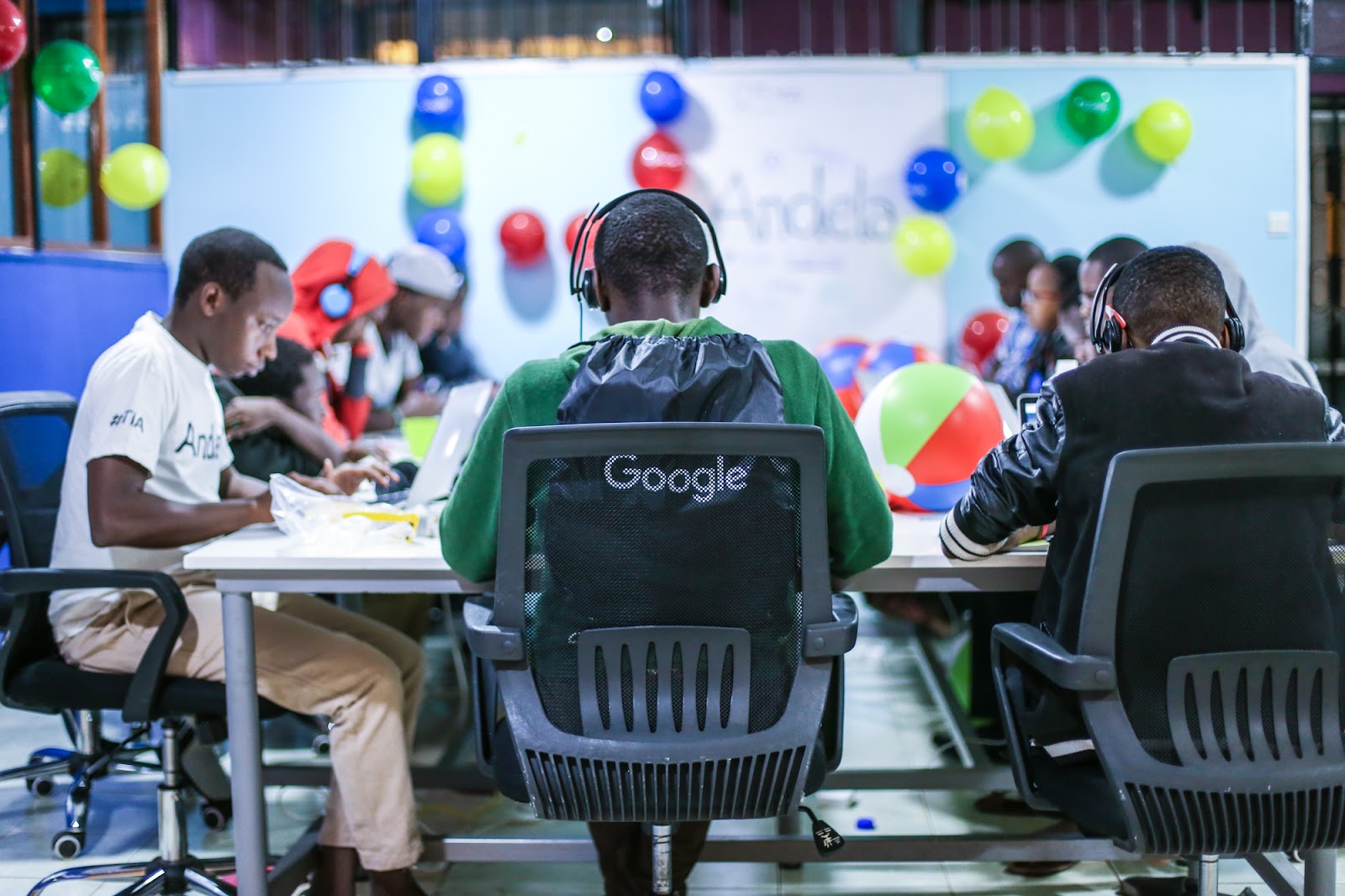
Students at a
hub
in Andela, Kenya
A month later, the top 52 teams (representing 22 different countries!) gathered at the Google Paris office to tackle
the Final Round problem
, which involved optimizing the operations of a set of
Terra Bella satellites
.
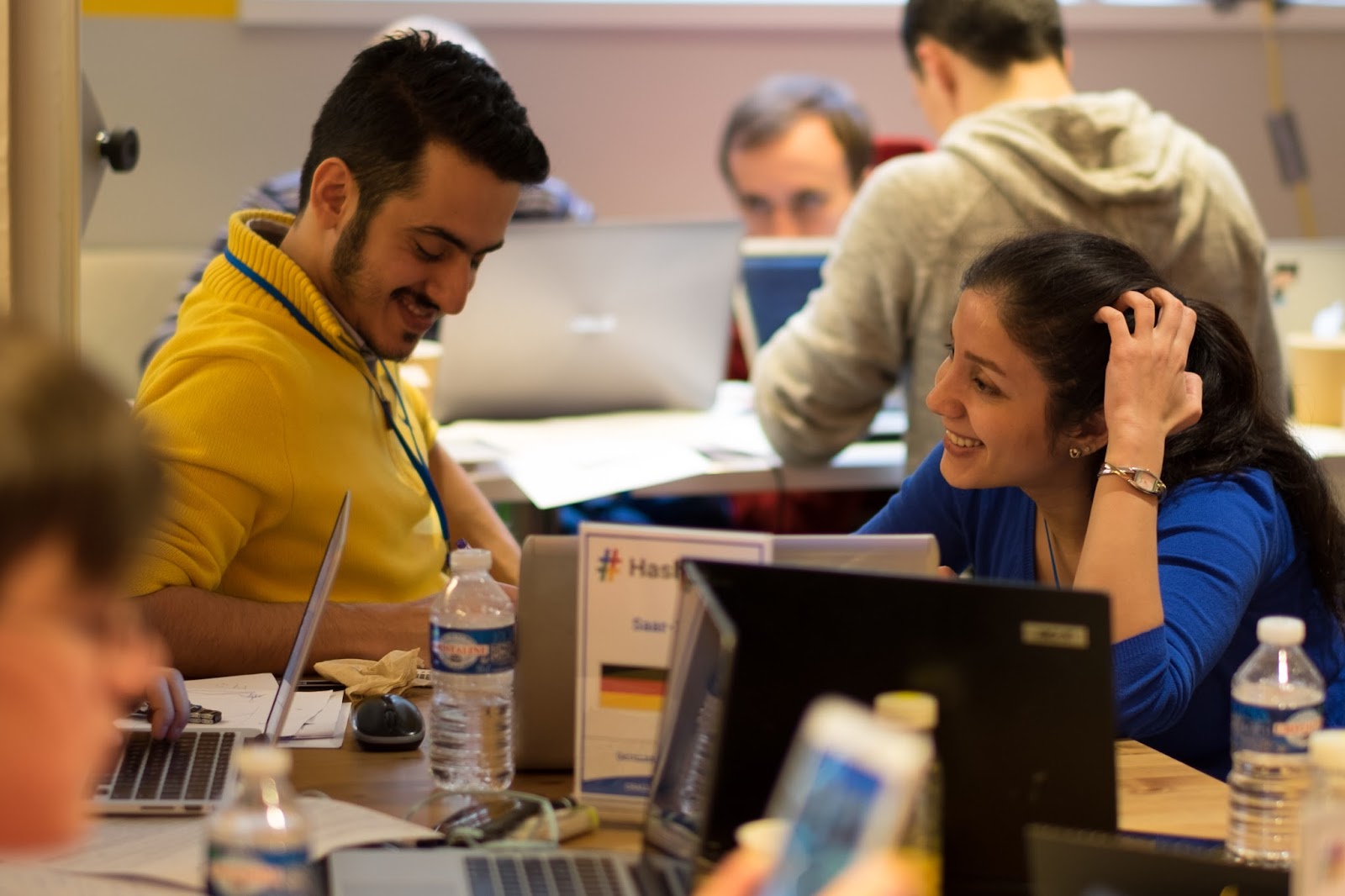
Team Saar-Land was one of five teams whose members came from different countries, in their case Germany and Switzerland.
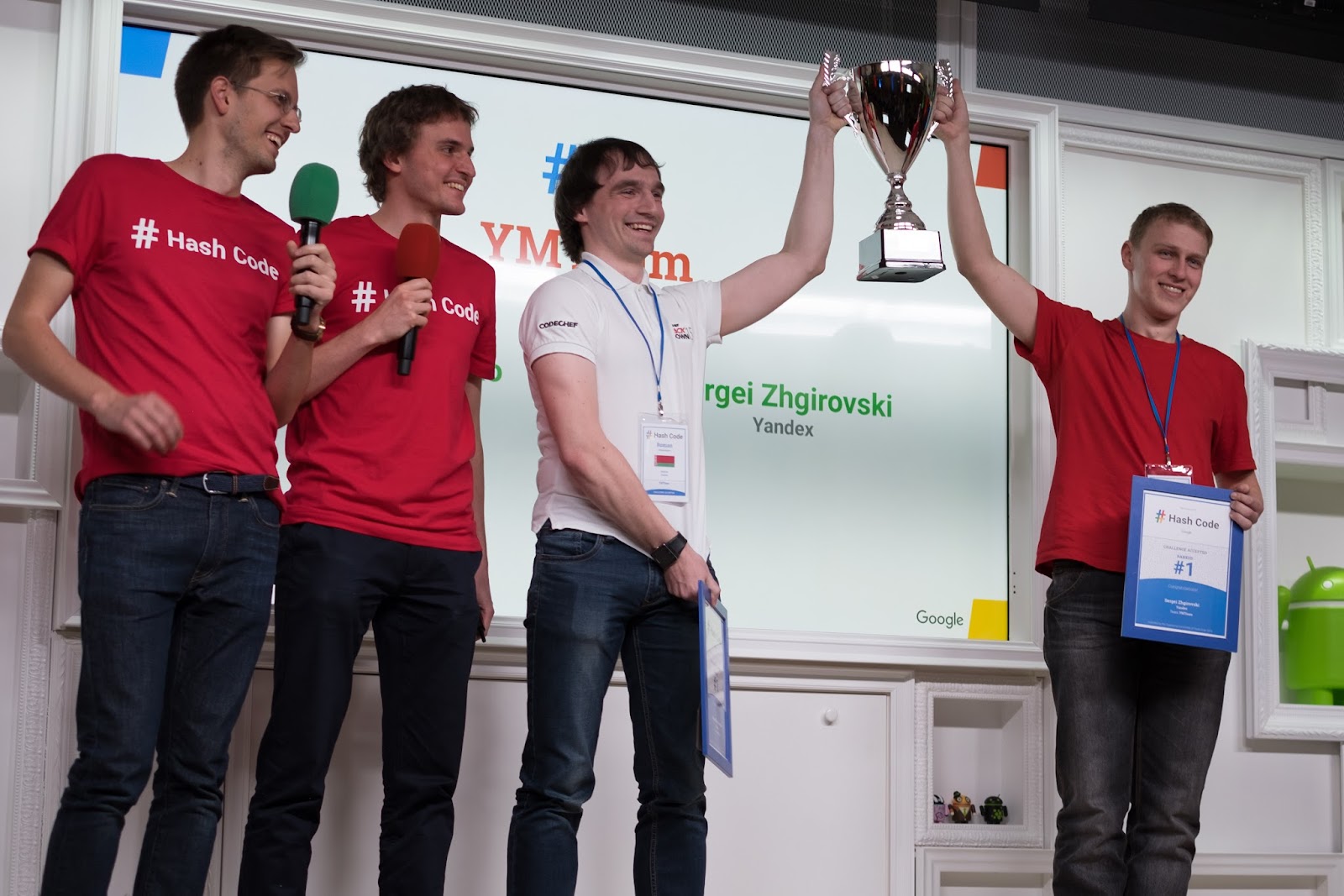
Teams were given six hours to come up with their best solution. The first place team was YMTeam from Belarus, followed closely behind by
Ababahalamaha
from Moscow and
Die Bergbokbende
from South Africa.
Congratulations to YMTeam for winning Hash Code 2016.
Congratulations to everyone who participated! If you’d like to receive a notification when registration opens up for Hash Code 2017,
fill out this form
.
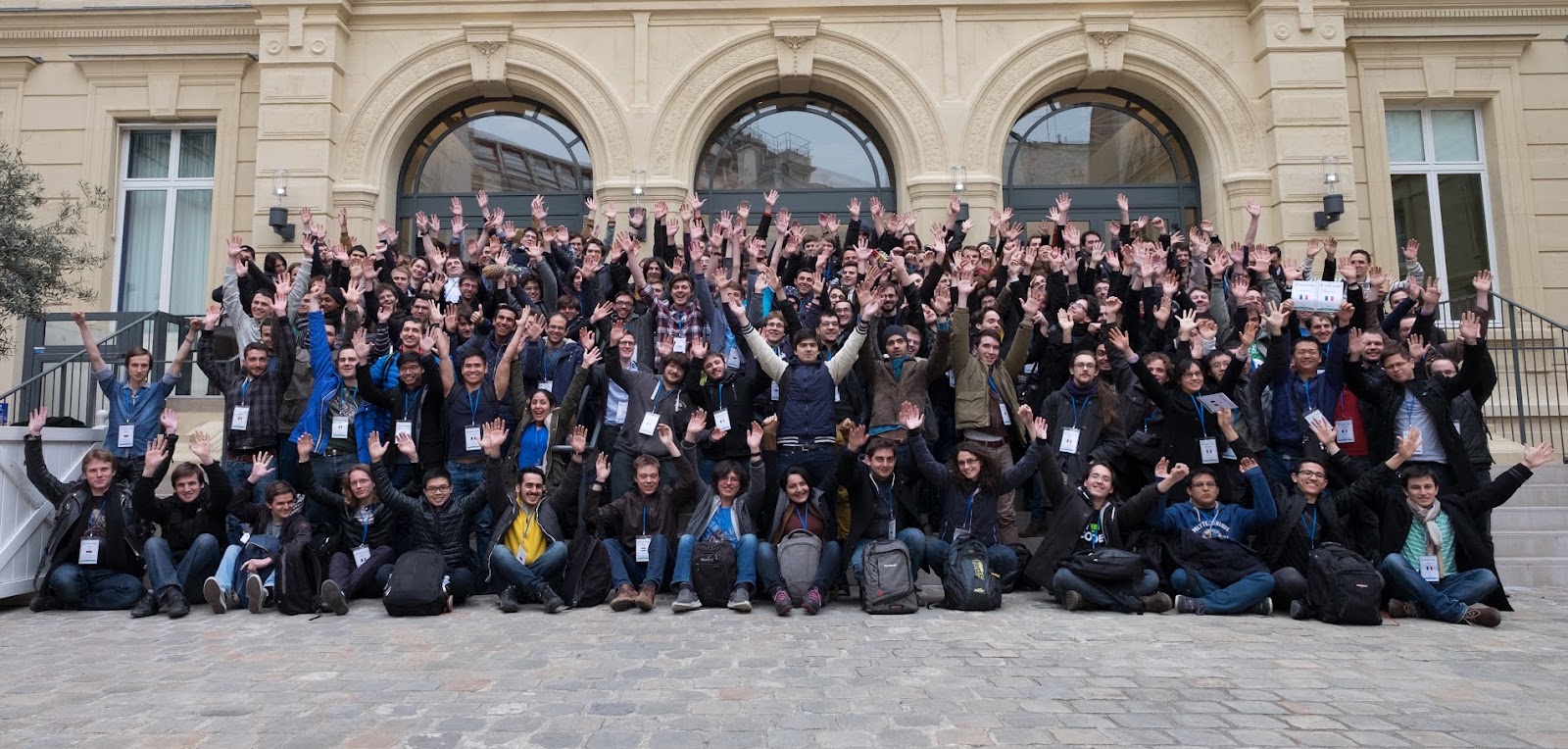
52 teams from 22 countries met at Google Paris
to compete in the Final Round of Hash Code 2016
Written by Jessica Safir, University Programs
My Journey with Google: Marcell
February 29, 2016
There are many ways to start your journey with Google. As a university student, two great ways are
AdCamp
and
BOLD Immersion
(apply by March 1st 2016!). Take a look at Marcell’s journey with Google.
My journey with Google began as an AdCamper (a.k.a. Google AdCamp participant). This is my story: I was doing a Master’s degree in Business Development and I was looking for career opportunities that would allow me to pursue my passion in marketing and advertising. I heard about AdCamp, so I went ahead and sent in my application (not really expecting to get a spot on the program).
As part of the AdCamp application process, I submitted a sales pitch about Google’s advertising platform (
AdWords
) for a fictitious SMB organization. The pitch gave me an opportunity to really shine (later I learned that consultative pitching is something Googlers do regularly within SMB Sales). The next thing I know, I’m an AdCamper, exploring the Google Office in Wroclaw, Poland, with many other students from across Europe, the Middle East and Africa. I can honestly say that the program was truly a unique and memorable part of my journey with Google.
Some of the greatest moments during my Adcamp experience were:
Getting culturally immersed: One of the coolest things about the program was the exposure we got to Google's company culture — from the one-of-a-kind workspaces, the awesome Googlers we met along the way, to trying out the great food!
Learning about life in the SMB team: I learned a lot about what they do in the SMB Sales and Global Customer Experience teams’ and found out how they operate in the digital advertising landscape, through sessions on YouTube as an ad platform, and talked about the importance of mobile in today’s marketing strategy.
Finding out about career opportunities: We had a whole day to learn about Google’s recruitment processes, get help with our CV’s and take part in a mock interview with a recruiter. This really helped me better understand how I could potentially become a future Googler.
My journey continued even after the program ended…
After taking part in AdCamp, I went back to my studies and finished my degree. Having had this Google experience, I was ready to interview for a full-time role on the SMB Sales team — and it was a success!
It’s now already been more than a year since I first stepped into Google Dublin as an
Associate Account Strategist
for the Hungarian market, and i’ve had a lot of fun along the way. If I had to describe our team’s vision in one sentence, I’d say: that our focus is on diversity, creativity and love for our customers whilst trying to help SMBs grow and achieve their business goals, by empowering them to become Micro-Multinationals through Google’s advertising solutions.
My highlights as a strategist to-date were:
Helping businesses grow: I’m responsible for a portfolio of clients. In many cases, they heavily rely on my expertise to run their whole online business strategy. This is both fascinating and challenging!
Developing professionally: Being curious and learning fast is so important. This is why I attend a lot of in-house trainings and look for ways to think outside-of-the-box.
Taking on new projects: I’ve also worked on projects outside of my team, such as facilitating a Negotiation Course with Googlers. During this year’s AdCamp program, I was also able to share my knowledge and experiences with participating ‘AdCampers’ — when only a year prior I was an ‘AdCamper’ myself!
Find out even more about AdCamp EMEA and apply here
(Apply by March 1st 2016)!
My Journey With Google: Kalina
February 25, 2016
There are many ways to start your journey with Google. As a university student, two great ways are
BOLD Immersion
and
AdCamp
(apply by March 1st 2016!). Take a look at Kalina’s journey with Google.
My journey with Google started one late, summer night as I was randomly browsing for the meaning of life. Let me decipher that -- I was looking for ways to make practical sense of my degree in Technology and Innovation Management. Naturally, I ended up looking for opportunities on the
Google Careers website
and stumbled upon the
BOLD Immersion Program
. The good news: I loved the description; the bad news: the deadline was in two hours. Fortunately, I managed to submit my application just in time and I was accepted to participate in the program.
Some of the greatest moments during my BOLD Immersion experience were:
Learning about Google’s culture and business: The program fully immersed me into Google’s world famous culture and gave me the chance to learn what Google’s core business is all about. It also gave me the opportunity to witness the type of professional opportunities open to me as a young professional.
Exploring the art of pitching: We all had the chance to do a Sales Pitch simulation that involved a lot of creativity (some groups included audio visual and stage performance in their pitch, which I found later on as a full-time Googler is not the most effective way to pitch to clients).
Making friends!: I made many new close friends with university students from across Europe, The Middle East and Africa, whom I continue to stay in touch with today.
And the highlights continued even after the program ended…
Mentorship Participation: After flying home, I was assigned the ultimate Google mentor, Olga. I am very grateful for all the time she took to help me develop my skills and prepare me for the actual interview process. Her great advice helped me through the recruitment process and also gave me insights into the work of a salesperson, managing relationships and expectations in the workplace. This was an invaluable source of knowledge for me!
Then, in September 2014 I was converted from a ‘BOLDer’ to a ‘Noogler’. There were a lot of Nooglers who joined at the same time as me. We all went through an intense one-month training program prior to joining our teams.
Following the training, I launched my Google career as an
Associate Account Strategist
on the SMB (Small and Medium-sized Business) Sales team for the Bulgarian market. As part of my core role, I have organized three big educational client events in Bulgaria and five design thinking workshops. I have also trained another member of my team, who arrived in mid-2015. I’m excited to be working on the “The Startup Meetups” project, launched by
Google for Entrepreneurs
, with their branding and design. The mission of “The Startup Meetups” is to engage with and empower Irish entrepreneurs by offering 1:1 mentoring sessions with a Google product expert. It’s great being part of a project with such a positive impact, helping startup businesses grow.
Outside of work hours, there are also loads of social activities at Google. This year, I’m acting as the main female lead in the adaptation of “The Picture of Dorian Gray” by Oscar Wilde, hosted internally.
Find out even more about the BOLD Immersion programs here
.
Google Science Fair 2016: #howcanwe make things better with science?
February 23, 2016
(Cross-posted on the
Official Google blog
.)
The
2016 Google Science Fair
opens for submissions today. Together with LEGO Education, National Geographic, Scientific American and Virgin Galactic, we’re inviting all young explorers and innovators to make something better through science and engineering. To learn more about the competition, how to enter, prize details and more, visit the
site
, and
follow along on Google+
and
Twitter
.
In this post,
2015 Grand Prize winner, Olivia Hallisey,
joins us to reflect back on her own experience with Google Science Fair.
I remember the day I first heard about the Google Science Fair last year. I was sitting in my 10th grade science class when my teacher asked us: “What will you try?” I loved the invitation—and the challenge—that the Google Science Fair offered. It was a chance to use science to do something that could really make a difference in the world.
I had always been curious and interested in science, and knew I wanted to submit a project, but didn’t really know exactly where to begin. I asked my teacher for his advice on selecting a research topic. He encouraged me to choose something that I felt passionate about, or something that outraged me, and told me to look at the world around me for inspiration. So I did. At that time, the Ebola crisis was all over the news. It was a devastating situation and I wanted to help be a part of the solution. I had found my project.
With the outbreak spreading so quickly, I decided that I wanted to find a way to diagnose the virus earlier so that treatment could be delivered as quickly as possible to those who were affected. I read online about silk’s amazing storage and stabilizing properties, and wondered if I could use silk to transport antibodies that could test for the virus. After many failed attempts (and cutting up lots of cocoons) I finally succeeded in creating a temperature-independent, portable, and inexpensive diagnostic test that could detect the Ebola virus in under 30 minutes. I was really excited that my research could help contribute to saving lives, and I was proud to be selected as the Grand Prize winner a few months later.
As the 2016 Google Science Fair launches today, I wanted to share a few tips from my own experience: First, as my teacher once guided me to do, look at the world around you for ideas. If you’re stuck, try the
Make Better Generator
to find something that excites or inspires you. Second, find a mentor who’s interested in the same things as you. There are a lot of
helpful ideas
on the GSF site to get you started. And finally, don’t get discouraged—often what first appears like failure can teach you so much more.
I urge other teenagers like me to take this opportunity to find a way to make the world around them better. Every one of us, no matter our age or background, can make a difference—and as young people, we’re not always so afraid to try things that adults think will fail. But change doesn’t happen overnight, and it often starts with a question. So look at the world around you and challenge yourself to make something better.
Science isn’t just a subject—it’s a way to make things better. So I hope you’ll join the
conversation
and
enter the Google Science Fair this year
. Our world is waiting to see what you come up with!
Contest Spotlight: ‘Paying It Forward’ in honor of Black History Month
February 19, 2016
Are you a social change agent in your community or know someone who is?
If so, we invite you to join Google’s third annual
“Pay It Forward” Contest
.
At Google, we value diversity and inclusion, and we support individuals who do the same. Our Staffing Programs team is celebrating diversity and honoring Black History Month by
inviting student organizations
to showcase how they have positively impacted the Black community. We’re seeking
US-based
student organizations recognized and approved by their college, university, or business school that have organized service or philanthropic support for their community to share the impact they are making. Examples include volunteering at an after school program, fundraising for an initiative or starting a community project.
Last year, we showcased
Elizabeth Davis
,
Robin McKinnie
,
Maurita Ament
and
Michael Tubbs
who collectively are advancing the lives of hundreds of people across the country through their social impact work.
The deadline to
enter the contest
is
February 29, 2016, at 11:59 pm PST.
Submissions will be judged by a team of Googlers, who will be assessing the innovation, scale and the short- and long-term effects of your impact. Winning organizations will have the opportunity to present their work at the
Google headquarters in Mountain View, CA, and
have their work showcased on the Google Student Blog.
To both enter the competition and get more info, visit our
2016 Black History Month website
.
We look forward to seeing your submission!
THe Google Staffing Programs team
Managing your time effectively in the #AdMobSAC16
February 10, 2016
Here are some pointers for managing your time as your team gets started in the #AdMobSAC16.
January to February:
Organize your team; if you haven’t found a team, utilize
Collabfinder
to ensure you find the best team possible.
Assign tasks and deliverables for people according to their strengths.
Brainstorm your ideas for your app.
Put together your strategy for project completion.
Tip: This is also a good time to familiarize yourself with the AdMob app policy, which can be found in the
AdMob Help Center
.
March:
As springtime approaches, your team should be in the heart of building the application. Focus on:
Design work and developing the basic elements of the app.
Aim to have a working prototype by the end of the month.
Don’t forget to
integrate AdMob
ads into your app. This is a key requirement.
Open it up for testing among a small group of trusted developers who are willing to provide detailed feedback.
Start thinking your app’s
promotional strategy
.
Tip: A large portion of #AdMobSAC16 is scored on the success of your app (such as the number of downloads and ratings - check the
judging criteria
for the full details) - you will need to give yourself enough time to put effort into promoting your app.
April:
Complete final testing and make refinements based on user feedback. Your app should be high quality, and part of that is responding to user suggestions.
Release your app on an app store and start promoting it.
Remember to
submit your app and AdMob account ID
to AdMob so we know you’ve built it.
May to June:
Continue promoting your app. Think about creative ways to do it.
Now will be the time to start readying your business report, which is due on June 28, 2016 by 5:00PM PST. The Challenge website already has a recommended
template
on it.
Remember, your project will be reviewed by a
panel of app experts from Google
, so your business report will need to be thorough and of professional-level quality.
Be sure to visit the AdMob website to
register
. Follow us on
AdMob G+
and
Twitter
and keep an update on #AdMobSAC16 too, for regular updates on the challenge.
Posted by Jeff Miner
AdMob Student App Challenge Team
We are excited to announce that Professor and Student Registrations for the 2016 Google Online Marketing Challenge (GOMC 2016) are now open.
February 1, 2016
The Google Online Marketing Challenge, now in its ninth year, is an annual global online marketing competition for students from higher education institutions around the world. Student teams develop and run an online advertising campaign using Google AdWords and/or Google+ for a real business or non-profit organization of their choice, using a US $250 budget provided by Google. An independent
GOMC Panel of Academics
, along with our own team, review the campaigns and select winning teams based on the success of their campaign and the quality of their competition reports.
Why GOMC?
GOMC provides a unique, hands-on learning experience by integrating a real-world business partner and budget into the classroom.
Students get a chance to support their local community by working with a non-profit, and the opportunity to win donations from a total pool of US $30,000.
GOMC enables professors to provide their students with an engaging and innovative in-class experience, which provides real-world impact and grading material.
Great prizes for global and regional winners of the challenge, including trips to Google offices, digital devices and more.
To learn about the impact of the GOMC,
check out this video.
What’s next?
In order for a student team to participate in the competition, they need to have their professor register first.
Professors can register
from January 26th until April 6th, 2016, and
students can register
from January 26th until April 20th, 2016.
For more information, please visit
www.google.com/onlinechallenge
. To stay informed about GOMC, add our Google+ Page to your circles:
google.com/+googleonlinemarketingchallenge
.
Here’s your chance to make a global impact!
The Google Online Marketing Challenge Team
Not your average app building competition: The AdMob Student App Challenge
January 28, 2016
Did you know that there are more mobile devices than people? In 2014, there were 7.4BN*
devices and an estimated 7.2 billion people. Mobile is quickly becoming the most popular way to get online, even exceeding the time spent on desktop computers
.** This has contributed greatly to the growth of the app ecosystem, with consumers spending on average 37 hours a month***
on mobile apps. As apps are becoming more prominent in our everyday lives, it’s more important now than ever to learn app development.
That’s why we’re launching the second
AdMob Student App Challenge
, an app building competition open to students around the world. If you’re a student who loves to code or has a great idea for a mobile app, this is your chance to build an app, learn how to make money from it, and win awesome prizes. The prizes will include a week-long trip to San Francisco and a visit to the Googleplex.
To win the challenge, you’ll need to build a great app (either Android or iOS) and create a sound business plan that shows how you managed the project, gained users, and leveraged AdMob to make money. The contest will be judged by a panel of app industry leaders. To learn more the judges, visit
here
.
The winning team will receive:
An all expenses paid, week-long trip to San Francisco, including a visit to the Googleplex in Mountain View, CA
A featured spot on the Google Play Store
A promotional video starring you and your app
A healthy amount of Google schwag, including a new Google device
Last year’s global winner was Phani Gaddipati, who created
Stacks Flashcards
, an app that lets people create electronic flashcards on any subject, quiz themselves and analyze their performance. Check out
his video
to learn more.
In addition to one overall winner, the finalist from each of the four global regions (North America, Latin America, Europe Middle East & Africa, and Asia Pacific) will receive Google devices and see their app featured on the AdMob website.
The challenge starts today, and you’ll have until June 28, 2016 to build your winning app. Be sure to visit the AdMob website to learn more and
register
. Follow us on
AdMob G+
and
Twitter
and keep an update on #AdMobSAC16 too, for regular updates on the challenge. .
Best of luck -- we can’t wait to see what you build!
Posted by Henry Wang
Product Marketing, AdMob
*Cisco, Cisco Visual Networking Index: Global Mobile Data Traffic Forecast Update 2014–2019 White Paper, February 2015 **eMarketer, US Time Spent with Media, October 2014 ***Nielsen, Smartphones: So Many Apps, So Much Time, July 2014
Labels
A Day in the Life of a New Grad in Google Dublin
7
AdCamp
2
AdMob
11
Ambassador Program
14
APAC
7
Appy Trails
28
Back to School
4
Better Know a New Grad
1
Better Know an Intern
15
Better Know an Office
4
Black History Month
10
Caitlin Talks to an Engineer
9
Chrome Extensions
3
Chromebook
1
College Tips by Google
1
Community
14
Conferences
16
consortium
1
CSSI
5
Day in the Life
2
deSTEMber
1
Development Programs
1
Diary of a Business Associate Intern
1
Diary of a Summer Intern
41
Diary of a Summer Intern - Erika
9
Diary of a Summer Intern - Franklin
3
Diary of a Summer Intern - Jess
3
Diary of a Summer intern - Luke
3
Diary of a Summer Intern - Madelaine
4
Diary of a Summer Intern - Pablo
3
Diary of a Summer Intern - Rio
4
Diary of a Summer Intern 2012
18
Diary of an MBA Intern
2
Education
19
EMEA
47
Europe
8
Events
13
Exploring Design at Google
4
GHC15
6
Going Green
6
Gone Google
2
Google Code University
1
Google Code-in
1
Google Games
3
Google Japan
1
Google Lime Scholarship
1
Google on campus
2
Google Online Marketing Challenge
10
Google Science Fair
2
Google.org
1
Google+
6
Googlers
14
Googlers Beta
11
Grace Hopper
11
GradTips
9
Hangouts On Air
21
Inside ITRP
6
Intern Insights
31
Intern Program
72
Interns Making an Impact
7
Interviews
1
Jobs
5
just for fun
30
K-12 (Pre-university)
14
LATAM
3
Life at Google
17
Middle East
1
My Path to Google
45
My Summer at Google
15
My Summer at Google 2012
10
North America
4
Office Environment
4
Open Source
9
PhD
7
Products
94
Programs and Competitions
116
Recruiter Tips and Tricks
15
Rice Plus
4
Scholarships
56
Search
1
STEM
2
STEP
1
Student Tips
15
Students
13
Summer of Code
1
Teach Parents Tech
10
Tech Students
3
Tips and Tricks
27
Women in Engineering
21
Young Innovators
10
YouTube
3
Archive
2020
Jul
May
Mar
Feb
Jan
2019
Dec
Nov
Oct
Sep
Aug
Jul
Jun
May
Apr
Mar
Feb
Jan
2018
Dec
Nov
Oct
Sep
Aug
Jul
Jun
May
Apr
Mar
Feb
Jan
2017
Dec
Nov
Oct
Sep
Aug
Jul
Jun
May
Apr
Mar
Feb
Jan
2016
Nov
Oct
Sep
Aug
Jul
Jun
Apr
Mar
Feb
Jan
2015
Dec
Oct
Sep
Aug
Jul
Jun
May
Apr
Mar
Feb
Jan
2014
Dec
Nov
Oct
Sep
Aug
Jul
Jun
May
Apr
Mar
Feb
Jan
2013
Dec
Nov
Oct
Sep
Aug
Jul
Jun
May
Apr
Mar
Feb
Jan
2012
Dec
Nov
Oct
Sep
Aug
Jul
Jun
May
Apr
Mar
Feb
Jan
2011
Dec
Nov
Oct
Sep
Aug
Jul
Jun
May
Apr
Mar
Feb
Jan
2010
Dec
Nov
Oct
Sep
Aug
Jul
Jun
May
Apr
Mar
Feb
Jan
2009
Dec
Nov
Oct
Sep
Aug
Jul
Jun
May
Apr
Mar
Feb
Jan
2008
Dec
Nov
Oct
Sep
Feed
Follow @GoogleStudents
Interested in opportunities and programs for students? Visit
google.com/students
.